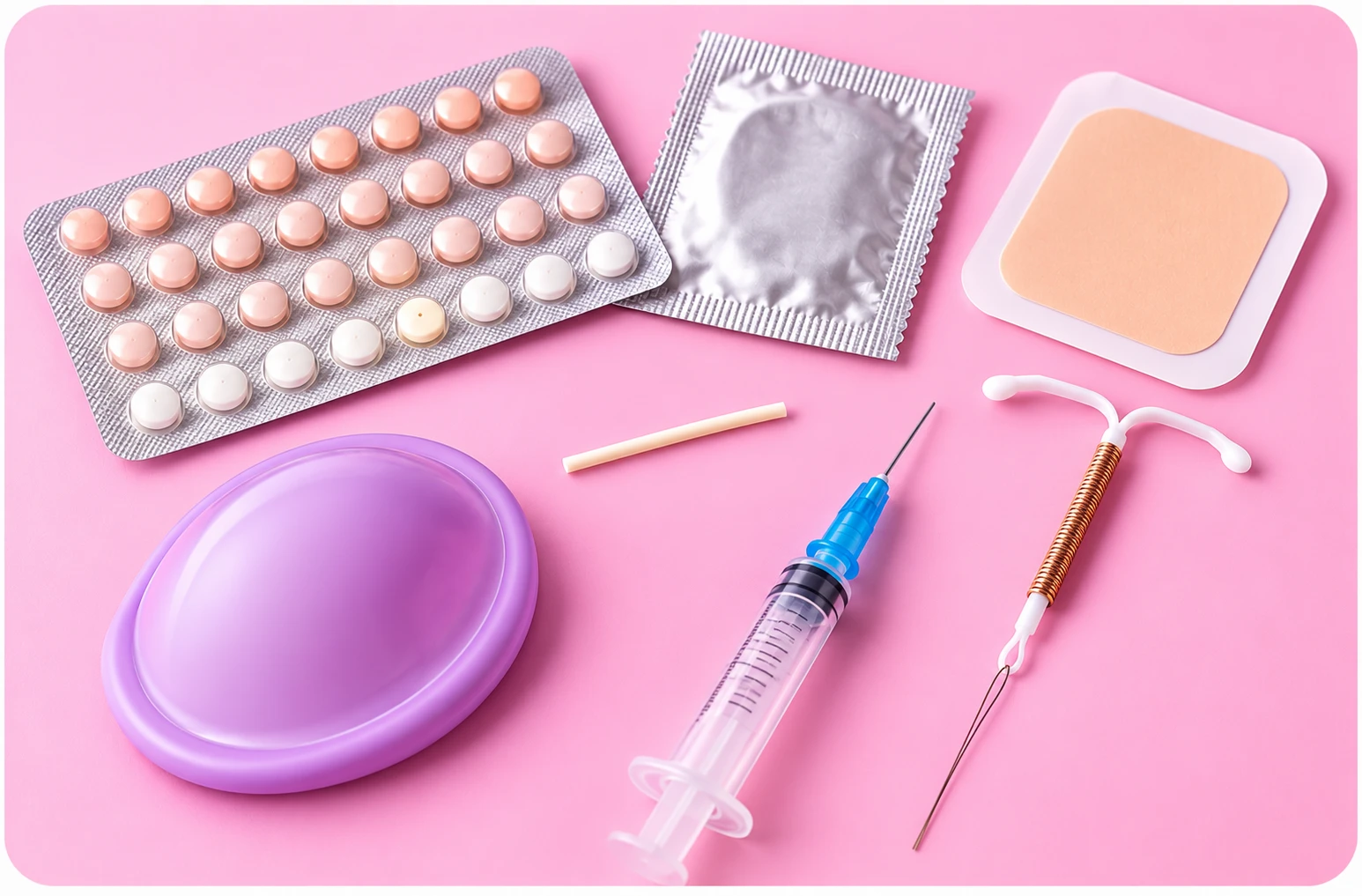
The decision to use birth control can be quite intimate. Maybe you wish to have lighter durations, think about side effects, or simply want something you will not forget in a hectic morning. Markland Wood Medical Clinic begins addressing contraception issues with a conversation about your life, not just a one-size-fits-all solution. The right decision is one that will suit your health, comfort, relationship and pregnancy plans. You deserve straight information and room to ask questions, including the embarrassing ones.
Contraception starts with what matters to you
Consider what you are looking for most before looking at the various methods of contraception. Is avoiding pregnancy your main priority?
Could it be that having fewer periods would help?
Would you like to go hormone-free?
Would you like to take medicine every day, or would you prefer something that lasts longer?
Your medical history is also important. Inform your clinician about migraine, blood clots, hypertension, smoking, medications and any potential for pregnancy. These details are used to help narrow the choices safely. Your friend's favourite method may not be right for you, and that doesn't mean that there's something wrong with your body.
The use of contraception should also be left to you. No one should force you to begin, stick with or end a method. A helpful appointment allows you to leave feeling informed about the pros and cons and what to do next, rather than rushed into an agreement.
Pills, patches, and vaginal rings
Hormonal contraceptives are bought in a combination pill with oestrogen and progestin or a progestin-only pill. While some are effective at just blocking ovulation, others are effective at making cervical mucus so thick that sperm finds it hard to get near an egg. The instructions will vary from product to product; consult your pharmacist about your particular prescription.
If you enjoy a routine, a pill might be ideal for you. If taking a pill each day seems like too much to remember, a patch or a vaginal ring might be preferable. Other hormonal therapies may also be used to control bleeding if it is heavy or it causes discomfort, but results vary.
Not all women can take contraceptives that contain oestrogen. Suitability may be impacted by migraine with aura, some type of blood risk, and smoking at an older reproductive age. Your provider can help you understand which is better, a progestin-only or non-hormonal method. Never sharing a prescription or assuming that all pills are equal in safety.
Longer-lasting contraception: IUDs and implants
If reminders are not your style, enquire about LARCs. Intrauterine devices (IUDs) are placed inside the uterus. The implant is placed beneath the skin of the top of the arm. These are methods that provide continuous pregnancy prevention without the need for remembering something every day.
Hormonal IUDs can reduce the amount of periods, and copper IUDs don't contain any hormones but can cause more cramping or bleeding. However, bleeding patterns can also be affected by implants. The duration of a method varies according to the product and the current guidance as well as the specific method being proposed; enquire about the length of the method being offered.
There's a reality to be had with insertion. Enquire about the process, options for pain control, and how to have it removed if you do not want to undergo it. Women's health services offered at the clinic include contraceptive counselling; find out whether the procedure is available or if there are referral arrangements before assuming that it will be safe to insert during your visit.
Hormone-free contraception and infection protection
When you prefer something that is only used when necessary, condoms are a good choice of contraceptives. Condoms are also effective at preventing sexually transmitted infections (STIs), unlike pills, IUDs, or implants. Some people are taking condoms as an extra form of reassurance and infection protection.
Another hormone-free option is copper IUDs. Fertility-awareness methods require the woman to observe signs of the cycle and to take note of certain rules for each method to determine the days of fertility. They need educating and constant monitoring, and they don't rely on a calendar app as a fail-safe!
In the real world, withdrawal is not as reliable as other choices. If it's particularly vital to avoid pregnancy, talk with her about a way that allows for fewer timing errors. To get a more comprehensive overview, visit the Society of Obstetricians and Gynaecologists of Canada's contraception information.
How needs change with age and life stage
Teenagers and young people may want contraceptive options that ensure privacy and accommodate evolving lifestyles. Teenagers and young people may seek contraceptive methods that maintain privacy and meet the changing needs of their lives. An appointment doesn't have to be a lecture; it can include consent, testing for infections, periods and practical access. Enquire about the clinic's policies regarding confidentiality and how prescriptions or results are shared.
A new approach is necessary for contraception after pregnancy. The methods that are appropriate are influenced by breastfeeding, recovery, risk of clotting, and time since delivery. Ovulation may resume prior to the first period, so please do not assume that if you do not bleed, then you cannot get pregnant.
During your forties and perimenopause, irregular periods are no sign that you can't conceive. There could be no need for contraception, or it might not be the safest option because of age-related health changes. MHT does not provide contraception. Discuss with your clinician when to stop using protection.
Contraception side effects, missed doses, and backup plans
With some methods, a few mild spotting, breast tenderness or nausea may occur, particularly early on. If symptoms persist or trouble arises, they should be reviewed. There is no need to suffer a practice that makes life difficult, and changing can be a sensible step in the right direction to finding a better fit.
Check the instructions ASAP if you miss doses, do not take if you vomit after taking the pill, or begin taking a new medication. The backup contraception needs vary according to the product and the situation. A pharmacist can help you with decision-making for today, instead of your next regular appointment.
EC is time sensitive. If you had unprotected sex or had a problem with your condom, see a pharmacist or clinician ASAP. The timing and medicine are different for each pill, and maybe an IUD can be used. Refrain from attempting to make your own calculations on risk.
Book a contraception appointment
Open to discussing your options?
Call Markland Wood Medical Clinic at 416-695-8878
Head to 4335 Bloor Street West, Etobicoke, ON M9C 2A5.
The home page of the clinic also has options for requests to make an appointment. Enquire about appointments, prescription discussions, and referrals for procedures. Carry your health card, list of medication and questions. If you have severe abdominal pain, sudden difficulty breathing, chest pain, etc., then seek urgent medical attention, not an online answer.
For more patient-centred information check out the clinic blog.
Frequently asked questions
1. My best contraceptive options?
A person's recommendation is not as important as your health history, bleeding tendencies, pregnancy plans, and instructions following abilities.
2. Will contraception impact future fertility?
Reversible methods do not result in persistent sterility. Recovery of fertility takes different amounts of time, especially after the use of injected birth control. Discuss your timeline of pregnancy prior to selection.
3. Will I gain weight from taking the pill?
There are many reasons for weight loss, and each technique will yield different results. Talk about the particular product, not assuming that all hormonal contraceptives are alike.
4. If I am not pregnant, am I able to use an IUD?
Often, yes. Previous pregnancy is not a requirement. A clinician will discuss your suitability, insertion and pain management and alternatives with you.
5. Is it safe to take contraception while breastfeeding?
But often the safest option is the method and the recentness of the delivery. Request postpartum guidance prior to taking a discontinued prescription.
6. Is an IUD safe for me?
An IUD is a method of contraception that doesn't provide protection against sexually transmitted infections. Condoms are still used for protection in case of infection.
7. What do I do if I miss a pill?
Take the prescribed pill as directed and be sure to see a pharmacist right away for the appropriate pill. Some form of backup protection or emergency contraception may be needed depending on the situation.
8. Is birth control effective in stopping painful periods?
There are some hormonal treatments that can help minimise bleeding and cramps. If a girl continues to have pain in the pelvis or the pain gets worse, further assessment is necessary and should not be dismissed as normal periods.
9. Does spotting always mean it's time to go into labour?
Not always. A spot may occur after beginning a method. Any bleeding, pain or pregnancy issues are serious and should be evaluated and not overlooked.
10. Am I able to cease contraceptives at any time?
Stopping or switching at any time may be discussed. Devices should be removed by a trained individual, and another technique may be necessary at the time.
11. Emergency contraception is the abortion pill?
No. Emergency contraception is contraception that is provided to prevent a pregnancy from occurring and is not the same as the medications that are provided to terminate an established pregnancy. Get immediate counsel and information regarding choices.
12. Is it safe to use contraception if I am going through perimenopause?
Sometimes, yes, as ovulation can occur. Your clinician will be able to discuss safety and let you know when you no longer need pregnancy protection.
13. Will the copper IUD not contain any hormones?
Yes. It is a contraceptive that does not contain hormones to prevent pregnancy. It might not be the best option for someone with already heavy or painful periods.
14. Will my medications affect contraception?
Certain methods can be affected by some medicines and supplements. Take a full list including non-prescribed medications to your pharmacist/clinician so they can review for interactions.
15. If the method does not have nice side effects, can I use another method?
Yes. Inquire how to move without a break in pregnancy protection. Other hormones, other delivery systems or no hormones at all may be better.
This article is general health information and is not a substitute for advice from your doctor.